


What to Do With a Student Whose Motivation Has Dropped
A student can lose interest in lessons one day. Listening to the reason first, then shrinking the goal and making progress visible often restores momentum.
Parents are usually looking not for information but for trust. A short, regular weekly summary cuts down on phone calls and strengthens the relationship.
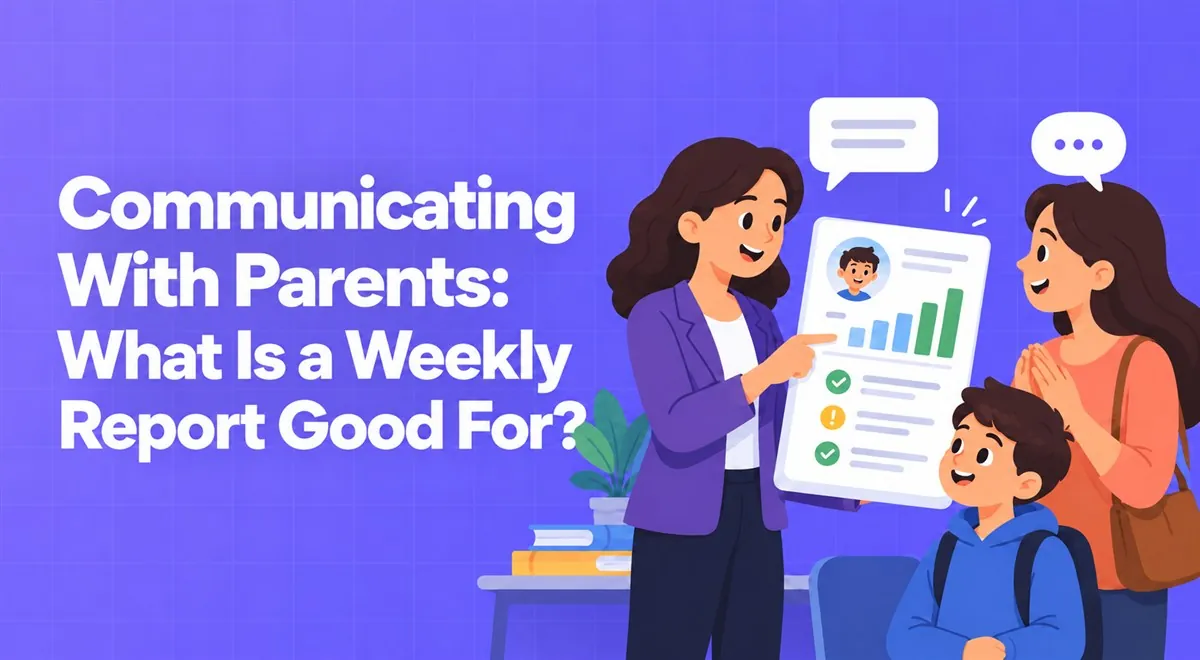
"Teacher, how is my child doing?" The reason a parent asks this several times, and at different hours at that, is usually not suspicion but not being able to see. They don't know what their child does during lesson time and want to know. A regular, short weekly summary largely removes this uncertainty.
The report doesn't have to be a report card or an accountability document. Its purpose is for the parent to be able to say "my child is in the right place, someone is looking after them." So it doesn't need to be long; three or four sentences are enough.
If you write with the same headings every week, it's easy for you and comfortable for the parent to read:
Concrete sentences like "this week they applied the order of operations in exponents correctly on their own" are more convincing than general statements like "very hardworking."
If the student isn't progressing, hiding it for a while brings relief in the short term but damages trust in the long term. State the observation first, then the possible reasons, then your plan: "For the last two weeks they've been stuck on fractions. There may be a gap in the basics; over the next two lessons we'll close it together, then I'll reassess." What a parent usually needs is not to hear that there's no problem but to see that someone has noticed the problem and is managing it.
Replying to messages every hour wears you out. A clear boundary like "I reply to messages on business days between 6 and 9 p.m." is met with respect. You can define a separate route for emergencies (for example, a change in the last minutes before lesson time).
The burden of a regularly performed task builds up unnoticed. Taking the data part of the report (which homework was submitted, which lessons were attended, which exams were taken) from a system instead of collecting it by hand saves a lot of time. On Vedubox Tutor a student's homework, exam, and video watching status are visible on one screen, and giving reports to parents is based on this data. There are also instant email notifications. For details, see the features page. Let the system collect the data and you add the interpretation; the parent trusts your observation most.
Reading the report in front of the student or saying "look, your teacher wrote this" pushes the student to defend themselves. Write the report so that it's transparent to the student too; saying "I'm going to write this to your parent too" is not to embarrass but to be honest.
Once a month add a personal sentence at the end of the report: "Last week they found a really nice way while solving this question, I told them so." Small details like this turn you, in the parent's eyes, from a "service provider" into someone who genuinely observes their child.
This article was prepared by the Vedubox team. For more information about Vedubox Tutor and our other products, you can visit vedubox.com.


Related content, tips, and updates to deepen your understanding and help you discover new ideas