

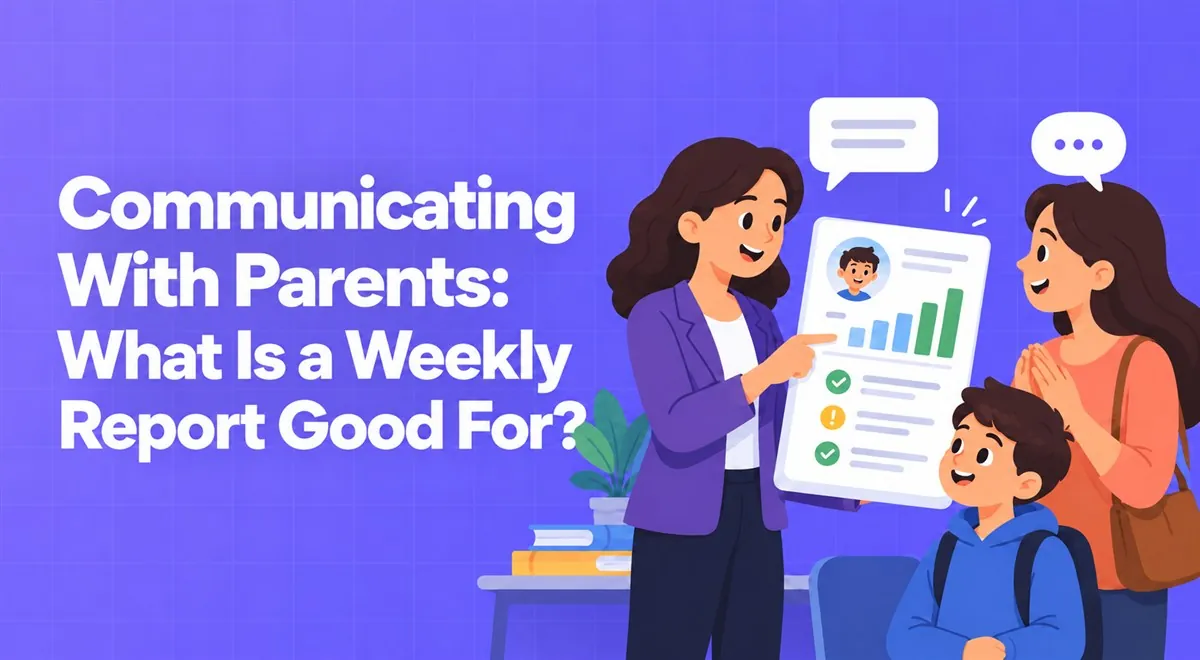
Communicating With Parents: What Is a Weekly Report Good For?
Parents are usually looking not for information but for trust. A short, regular weekly summary cuts down on phone calls and strengthens the relationship.
Exams aren't only for grading; they can also be for seeing learning. Five-question mini tests give both the student and the tutor a clear direction.

The word "exam" creates a slight tension in most students. Yet not every exam has to be done to give grades. A short test of five or six questions can be a mirror showing what the student has learned, what they've forgotten, and what they never understood.
The purpose of short quizzes is information, not points. Tell the student this openly: "This quick check is so I can see where I can help." Without the fear of grades the student answers more honestly, and you see the real picture.
A small question in every lesson or a five-question test once a week is a sustainable pace for most students. Doing it too often tires the student; doing it too rarely reduces the effect of repetition. Adjust it for your own students; try it for a month and watch the reactions.
Building a small "question pool" makes your job much easier. Write ten or fifteen questions per topic and pick five or six at random for each test. The same questions will recur over time, but repetition is itself a learning method. Vary the question types: multiple choice, fill in the blank, short answer.
On the exam and quiz side the platform does several jobs: you can create question pools and define timed exams. Results are graded automatically; open-ended questions are supported too. When exams end, outcome reports and analyses come ready. That way, instead of reading papers for hours after each exam, you can spend time seeing where the gaps are. You can find the details on the features page.
The real value of an exam shows in what you do with the results. Devote the first five minutes of the next lesson to the question most students got wrong. Saying "three people got this question wrong, let's look at it together" deepens learning without embarrassing anyone.
Asking "why did you think that?" when a student gives a wrong answer teaches a lot. Because most mistakes aren't random; they come from a consistent chain of wrong thinking. Finding that chain is far more lasting than drilling the right answer.
On an ungraded test, instead of telling the parent "14 out of 20," saying "good at these three topics, needs support in this one" is more constructive. A number says something but doesn't show direction. A short written summary keeps both parent and student in a calmer place.
Try just one thing this week: a five-question, ungraded mini test at the end of your next lesson. In the following lesson, revisit a topic based on the results. At the end of a month you'll see how different a place the students and you are in.
This article was prepared by the Vedubox team. For more information about Vedubox Tutor and our other products, you can visit vedubox.com.


Related content, tips, and updates to deepen your understanding and help you discover new ideas