
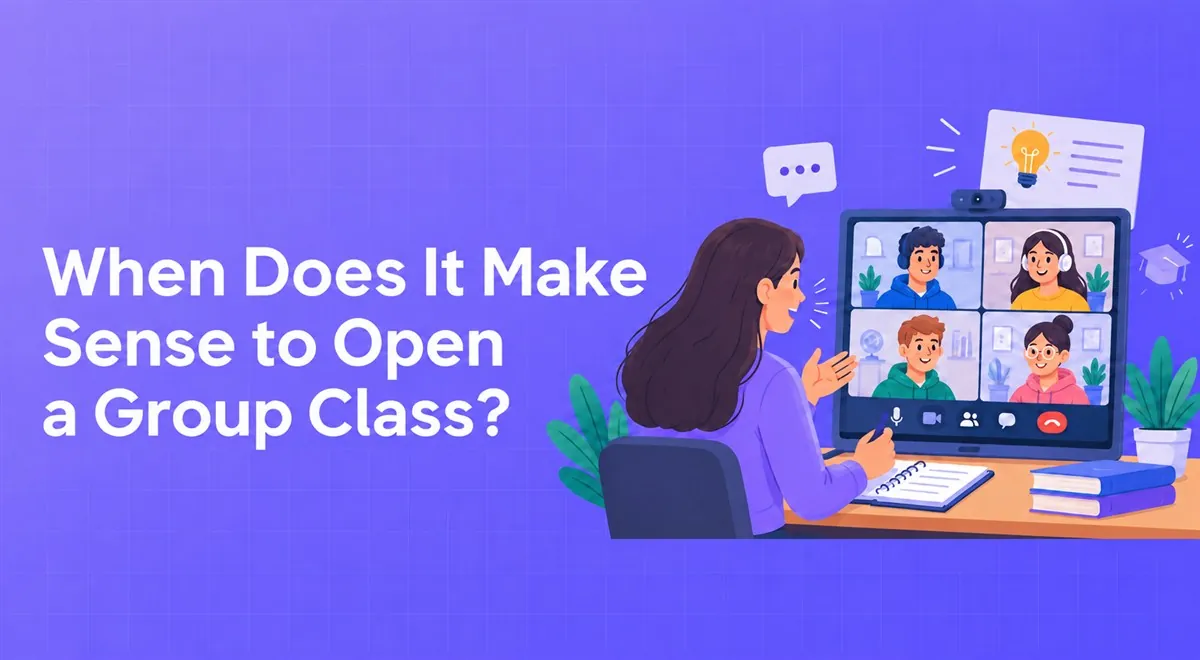
When Does It Make Sense to Open a Group Class?
One-on-one lessons are powerful but limited. When set up well, a group class gives students new motivation and gives tutors a more efficient schedule.
A lesson recording is a lifesaver for a student who missed class, but it can feel uncomfortable for some. A balanced look at consent, usage, and archive organization.
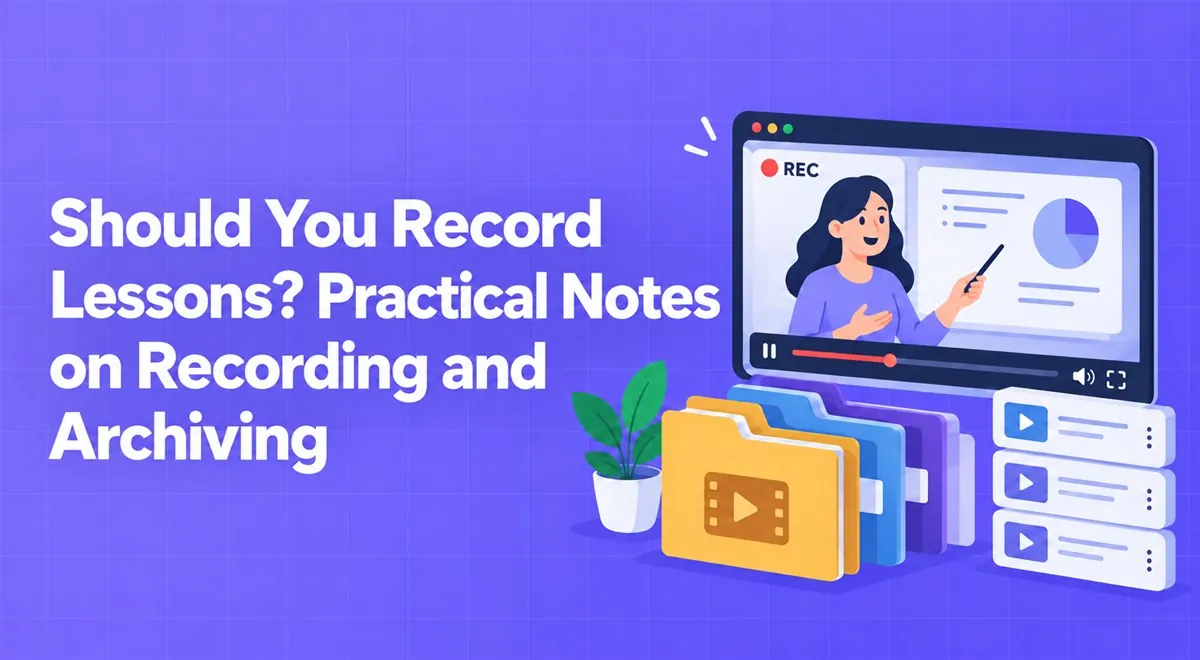
There are two groups of tutors on recording lessons: those who say "Always record" and those who say "recording ruins the naturalness of the lesson." Both are right. Whatever your decision, there's one principle: there should be no recording the student and parent don't know about.
A student who misses a lesson can watch the recording and catch up. A student who has trouble understanding a topic can rewatch the same explanation as many times as they like. You can also watch your own lesson back and notice things like "I went too fast here." This is one of the most honest ways to improve yourself.
Some students become uncomfortable when they know they're being recorded on camera and hesitate to ask questions. Image and audio recording is also a sensitive subject with younger age groups. The answers to where recordings are stored, who can access them, and how long they're kept should be clear. For legal requirements on this, I recommend consulting a legal advisor or up-to-date sources on personal data protection legislation.
"I'm recording this lesson; it will only be shared with you, so that you can review it." This sentence is often enough, but getting written consent is safer. If the student or parent says "I don't want recording," accept this decision without questioning it; prepare an alternative plan for that lesson (lesson notes, a short summary).
Rewatching an entire lesson recording isn't something most students will do. It's far more useful to cut short five- to ten-minute segments from the recording ("the explanation of this topic") or to add a short written summary at the end of the lesson. Think of the recording as a "backup" and the summary as the main source.
Recordings named with the date and topic can be found even a month later. Keep the recording somewhere only the relevant student can see. Vedubox Tutor's virtual classroom has features like automatic lesson recording and attendance reports; you can organize your recordings through the library and archive and assign them to the relevant student. Details are on the features page.
Some lessons (very personal, very private, or conversation-heavy) may run more comfortably off the record. This isn't a shortcoming but a conscious choice. Tell the student this openly: "I don't record these lessons, so I'll send the key points as notes after the lesson."
Recording or not recording is not a rule but a choice. Whichever you choose: be open, get consent, keep recordings safe, and use them in a way that truly benefits the student.
This article was prepared by the Vedubox team. For more information about Vedubox Tutor and our other products, you can visit vedubox.com.


Related content, tips, and updates to deepen your understanding and help you discover new ideas