
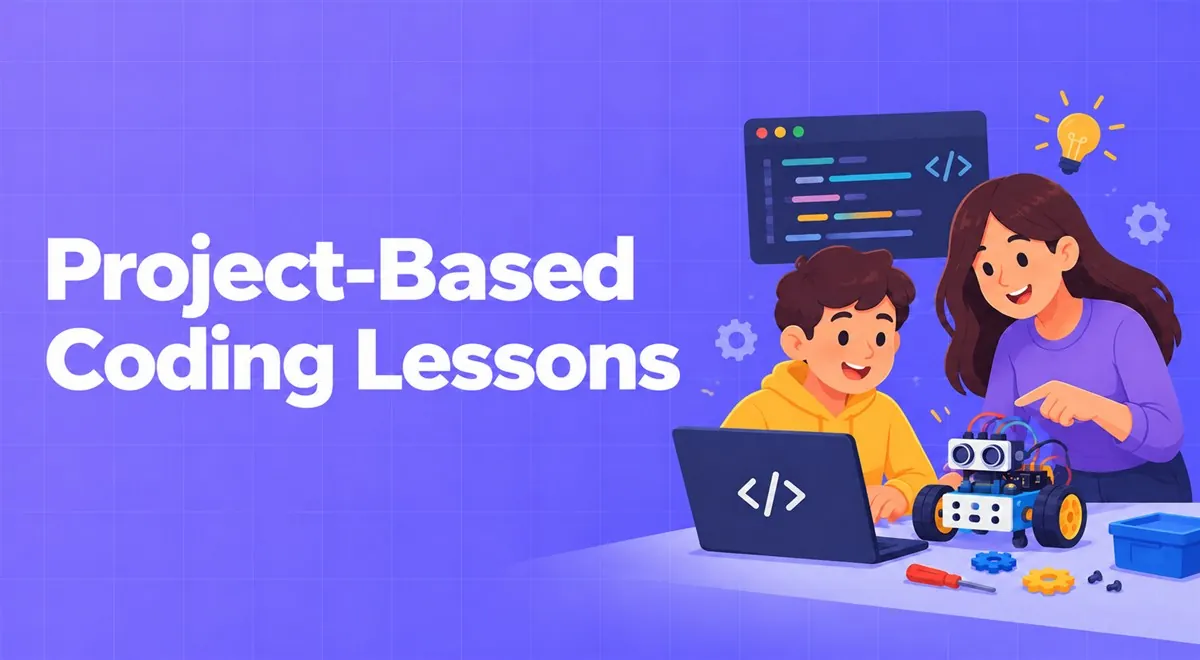
Project-Based Coding Lessons
Code is learned by writing, not by watching. Working with small projects, teaching debugging, and following up on homework regularly make coding lessons far more effective.
If the teacher does most of the talking in a speaking lesson, the lesson has failed. A structure that gets the student talking, corrects mistakes without breaking the flow, and takes practice beyond the lesson.
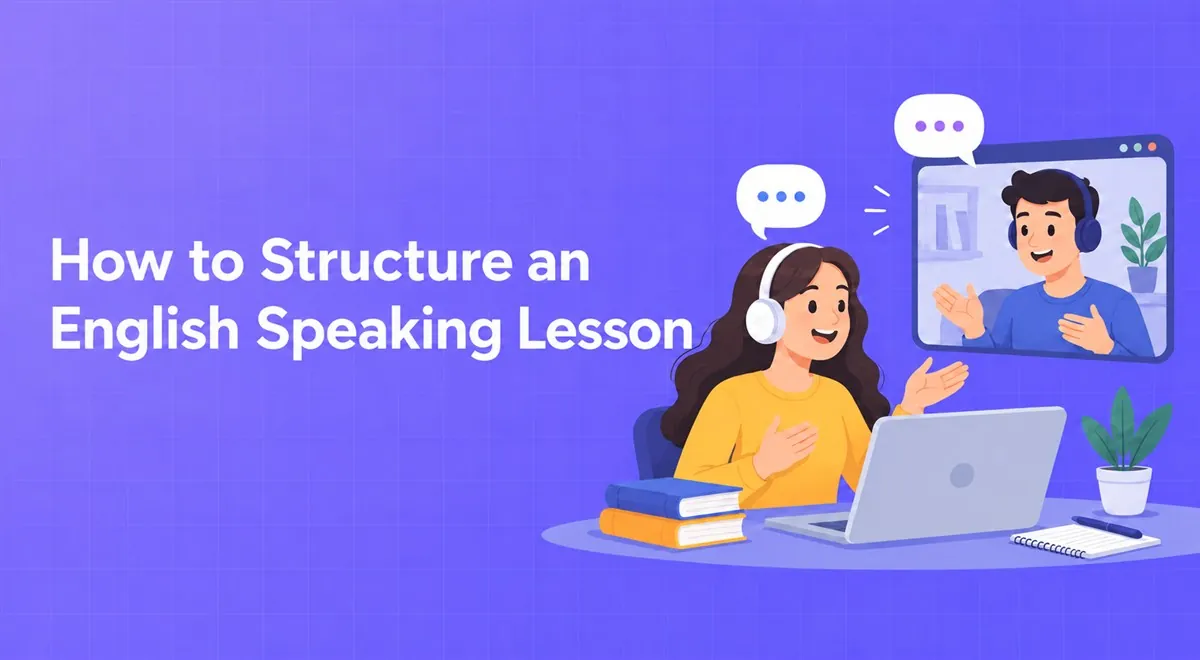
If at the end of an English speaking lesson the number of sentences that came out of the student's mouth is fewer than the teacher's, the lesson has stopped being a speaking lesson. We all talk a lot without realizing it: we explain, give examples, answer the question ourselves. Yet students learn to speak only by speaking.
Recording a lesson (with the student's permission) and listening to it is a surprising experience for most tutors. Your own speaking time can come out far above your estimate. As a goal, try to keep the student's speaking time greater than the teacher's. Think of this not as an exact ratio but as a goal that points the direction.
Constantly interrupting a student to correct them while they speak breaks the flow and extinguishes the desire to speak. The alternative: take short notes while the student speaks, and at the end of the lesson or at the end of a sentence discuss the two or three most important mistakes. Correct mistakes that cause a loss of meaning immediately, while noting small grammar slips to address later. You don't have to correct every mistake; let the student's repeated mistakes that most disrupt communication be the priority.
"Let's talk about the present tense today" isn't a task. "You're ordering at a restaurant, the waiter brought the wrong dish, what do you say?" is a task. Tasks with a real purpose, like interview rehearsal, summarizing a news story, describing a picture, or planning a vacation, make speaking natural. Topics from the student's own life (their job, hobbies, goals) are often the most motivating.
One or two lessons a week aren't enough for speaking to turn into a habit. Asking the student for a short daily voice recording (a minute or two on a topic) carries practice between lessons. As introduced on Vedubox Tutor's English tutors page, students can send audio homework and you can reply with timestamped voice comments; progress builds up in the recordings. Because you listen and respond when you're available, this method doesn't strain your calendar either.
New words don't stick once they're learned; spaced repetition is needed. Keep the student's word list and give a short test once a week. As described on the same page, the platform can generate automatic quizzes from your word list. When the burden of preparing tests by hand is lifted, you can devote the lesson to speaking.
In groups, speaking time is divided per person, but you can increase it with pairings: have students speak in pairs while you walk around and listen. The same page offers speaking rooms (everyone speaks at the same time, the teacher moves between rooms) as a feature. For how to set up group lessons, see the group lessons article.
Thanks to the internet, it's possible to work with students in other time zones. In this case lesson times and payment can get a bit complicated. According to the page, the platform offers a time-zone-aware calendar and payment in different currencies; we recommend checking for yourself which currencies and terms apply before using it.
Speaking English is still a bit embarrassing for most students. Approaching mistakes with a smile and talking about your own mistakes too (funny mistakes made while learning a foreign language) puts the student at ease. The first task of a speaking lesson is to make sure the student isn't afraid of speaking.
This article was prepared by the Vedubox team. For more information about Vedubox Tutor and our other products, you can visit vedubox.com.


Related content, tips, and updates to deepen your understanding and help you discover new ideas